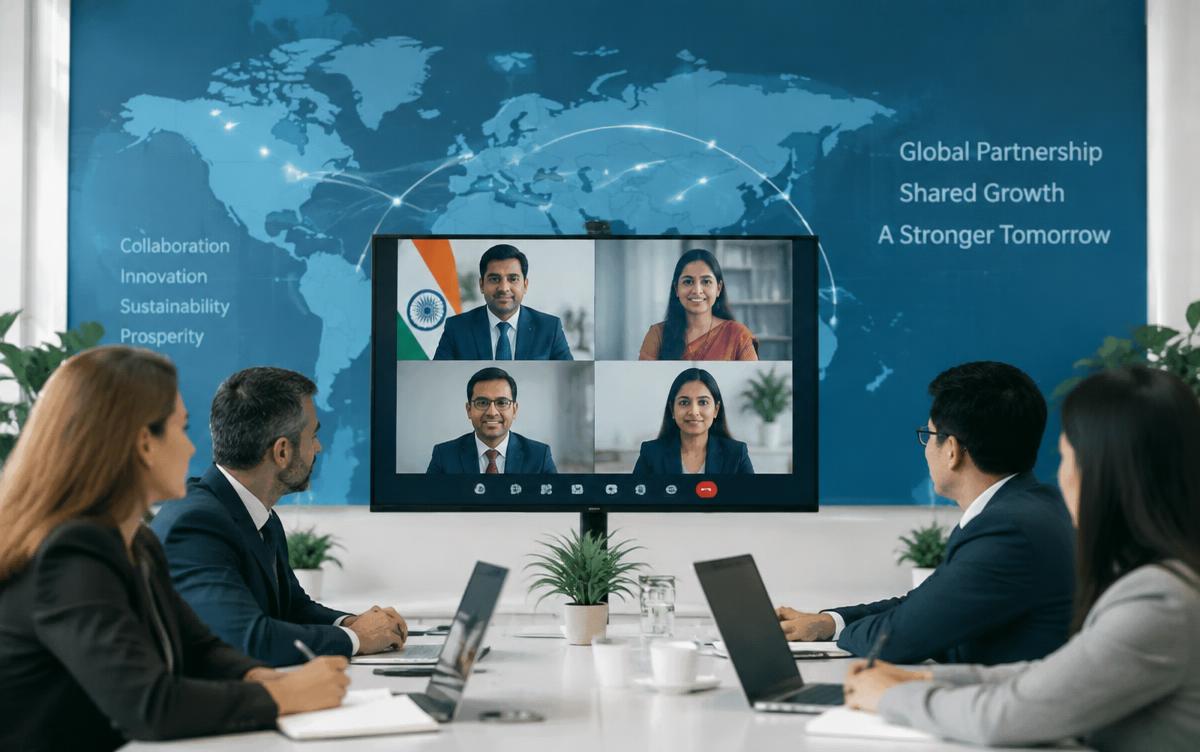
For German businesses
Market research in India for Germany companies
German engineering and automotive firms commission B2B studies on Indian buyers and suppliers. We plan, field and analyse the work in India, and report it in English on your clock.
Quick answer
Market Research India is an India-based research consultancy that works for clients in Germany. You contract with us directly — no Indian entity needed — and we run market entry, B2B and consumer studies across 50 Indian cities, invoiced in EUR, reported in English, with readouts at 10:00 am CET.
Proposal in 24 hours
Scoped, itemised and fixed-fee.
50 cities, 14 languages
Our own supervised field teams.
Senior-led, NDA-first
A research director on every project.
2,400+
Projects delivered
50
Cities with field teams
30
Industries covered
14
Indian languages
01
Why German companies research India first
German entries into India are usually B2B and usually technical: machinery, components, process equipment and the service model around them. The decision is rarely about whether Indian demand exists. It is about which buyers specify on total cost of ownership rather than price, how much of the German specification survives contact with an Indian budget, and whether a shortlisted supplier or JV partner is what it claims to be.
Engineering sold into Indian plants
Plant and procurement heads judge total cost of ownership, service response and local spares availability, not specification sheets. That is interview work, not desk research.
Decide what to engineer out
German products often arrive over-specified for Indian price points. Research settles which features buyers will pay for and which can go.
Supplier and JV due diligence
Before signing a Tier-1 supplier or joint-venture partner, independent channel interviews test capacity, quality systems and reputation in the trade.
Entering before you staff
Mittelstand firms typically research India before they put anyone here, so fieldwork, translation and local scheduling all have to be run from this end.
02
How a cross-border engagement runs
You are commissioning fieldwork in a market you cannot supervise in person, so the process is built around visibility: you see the instrument before it goes out, the progress while it is in field, and the assumptions behind every number that comes back.
- 1
Brief and mutual NDA
A 45-minute scoping call in your window — 9:00 am–1:30 pm CET is 1:30–6:00 pm in India, so a full working overlap exists every day. Readouts are usually booked at 10:00 am CET. We sign a mutual NDA before the brief is discussed in any detail, so nothing commercially sensitive travels unprotected.
- 2
Proposal and fixed costing
Within 24 hours you get a written proposal: objectives, method, sample plan by city, field timeline and a fixed fee in EUR. No Indian entity, agent or local partner is required on your side to commission it.
- 3
Instrument design and translation
We draft the questionnaire or discussion guide in English for your sign-off, then translate it into the languages of each fieldwork city and back-translate so you can see exactly what was asked.
- 4
Fieldwork across Pune, Chennai, Delhi NCR and Bangalore and beyond
Our own supervised teams collect the data, with GPS tagging, audio back-checks and independent validation of a share of every interviewer's work. You get a progress tracker, not silence.
- 5
Analysis, modelling and quality control
Weighting, cross-tabulation and — where the brief calls for it — a sizing or pricing model whose assumptions are all visible and all editable by you.
- 6
Readout on your clock
A live debrief at a time that suits you (10:00 am CET is the usual slot), an English report and deck, the clean dataset, and two weeks of follow-up questions included.
03
The commercial and legal basics, from Germany
These are the questions overseas buyers ask before a brief is even written, so we answer them up front rather than in the small print of a proposal.
Working with us from abroad
- Contracting
- You contract directly with our Indian entity from Germany. No subsidiary, local agent or joint venture is needed on your side to commission a study.
- Invoicing
- Quoted and invoiced in EUR; USD, EUR, GBP or INR are all available if your finance team prefers another. Payment stages are agreed in the proposal, not after the fact.
- Confidentiality
- A mutual NDA is signed before the brief is discussed in detail, and we never name a client or quote a finding publicly without written permission.
- Data protection
- GDPR-aligned handling, with data-processing terms in the contract and standard contractual clauses covering the transfer to India.
- IP and ownership
- Instruments, transcripts, the clean dataset and the report are yours. We keep no right to resell commissioned findings to anyone else.
- Language
- English end to end for you. Instruments are translated for fieldwork in Indian languages and back-translated so the record shows exactly what respondents were asked.
- Observing fieldwork
- Focus groups stream live from viewing facilities with simultaneous English translation, and interview recordings and transcripts are shared as fieldwork progresses.
- Calls and readouts
- 9:00 am–1:30 pm CET is 1:30–6:00 pm in India, so a full working overlap exists every day. Readouts are usually booked at 10:00 am CET.
- Typical programme
- 8–12 weeks from signed brief to readout for a multi-city entry study; shorter for a single-city or online-only read.
Where your data sits
Scope of work
Studies that fit an India entry plan
These six carry most German entry programmes, roughly in the order they are commissioned: size the opportunity, test whether it is reachable, then price and position against the incumbents.
Strategy
B2B Market Research
Interviews with the procurement heads, plant managers and distributors who decide whether your product ever gets bought here.
ViewStrategy
Market Sizing & Forecasting
TAM, SAM and SOM built bottom-up with every assumption written down, so your board argues with the numbers rather than the method.
ViewStrategy
Market Feasibility Studies
The whether, where and how of entry in one document: demand, competition, cost base, risks and a recommended first market.
ViewStrategy
Competitor Analysis
Positioning, pricing, distribution and win-loss evidence on the incumbents you will be taking share from.
ViewStrategy
Pricing Research
Van Westendorp, Gabor-Granger and conjoint work to find a price Indian buyers accept and your margin survives.
ViewQualitative
In-Depth Interviews
Senior one-to-one conversations for the cases where the buyer universe is small, named and impossible to survey.
View
Sector focus
Where German capital goes in India
Automotive leads the corridor, but most programmes touch two or three of these. Each sector page sets out the audiences we recruit and the questions that category usually needs answered.
Automotive
The OEM and Tier-1 clusters around Pune, Chennai and the NCR are where most German automotive work begins.
ViewManufacturing & Industrial
Machinery, automation and process equipment sold to Indian plant and procurement heads — the core German B2B study.
ViewChemicals & Specialty Materials
Specialty chemicals and import substitution: who the real end users are, and what they currently pay a competitor.
ViewElectric Vehicles
Adoption, charging and pricing research for India's fast-growing EV market.
ViewInformation Technology & SaaS
B2B research for IT services, SaaS and cloud companies selling in India.
ViewMedical Devices
Clinician, hospital and procurement research for medical device makers.
View
Sequencing
Where to start in India
Start with 4 metros — Pune, Chennai, Delhi NCR and Bangalore — which between them carry most of the demand German entrants are chasing. Once the proposition holds there, extend the same instrument to Gurugram, Coimbatore, Vadodara and Rajkot to see whether it scales past the metros, where it usually costs less to grow.
Wave 1 · metro
Pune
An automotive and IT cluster with one of India's largest student populations. Overlaps directly with your Automotive, Information Technology & SaaS and Manufacturing & Industrial work.
ViewWave 1 · metro
Chennai
Relevant here for Automotive, Manufacturing & Industrial and Information Technology & SaaS. The 'Detroit of India', a manufacturing and healthcare powerhouse on the east coast.
ViewWave 1 · metro
Delhi NCR
Relevant here for Automotive. The national capital region, a vast and diverse consumer market and India's policy hub.
ViewWave 1 · metro
Bangalore
India's startup and technology capital, home to global capability centres and digital-first consumers. Overlaps directly with your Information Technology & SaaS work.
ViewWave 2 · Tier 2
Gurugram
A corporate hub hosting many MNC headquarters and India's auto industry. Overlaps directly with your Information Technology & SaaS and Automotive work.
ViewWave 2 · Tier 2
Coimbatore
The Manchester of South India, known for textiles, pumps and engineering. Overlaps directly with your Manufacturing & Industrial work.
ViewWave 2 · Tier 2
Vadodara
Relevant here for Chemicals & Specialty Materials and Manufacturing & Industrial. An industrial city with petrochemical, engineering and education strengths.
ViewWave 2 · Tier 2
Rajkot
Manufacturing & Industrial and Automotive research lands well in this market. An engineering and auto-component cluster in Saurashtra.
View
Before you brief us
Frequently asked questions
How do German companies commission research in India without an entity here?
You contract directly with our Indian entity from Germany. Send a brief by email or take a scoping call, we sign a mutual NDA, and a written proposal with a fixed fee follows within 24 hours. Everything after that — recruitment, translation, fieldwork, supervision and analysis — is run by our own teams on the ground.
Which currency do you invoice in, and how do payments work?
We quote and invoice in EUR, and can switch to USD, EUR, GBP or INR if your finance team prefers. Payment stages are set out in the proposal before you sign, and we bill by international bank transfer against a standard invoice your accounts team can process.
How is our data protected once it leaves our side?
Your brief, instruments and findings are handled on GDPR-aligned terms: data-processing language written into the contract, a documented lawful basis for contacting respondents, standard contractual clauses covering the transfer of personal data to India, named-access-only storage, and deletion of raw files on your instruction. Delivered datasets are pseudonymised unless you specifically need identifiers for follow-up.
Who owns the data, the instruments and the report?
You do. The questionnaire or discussion guide, the recordings and transcripts, the clean dataset and the final report are all yours on completion. We retain no right to resell commissioned findings, and we do not fold your data into a syndicated product.
Can our team in Germany observe the fieldwork?
Yes. Focus groups are streamed live from our viewing facilities with simultaneous English translation, so you can watch from Germany and send questions to the moderator in real time. Depth interviews are recorded and transcribed, and some clients fly in for a field visit during the first wave.
What does a multi-city India study cost, and how long does it take?
Cost depends on sample size, audience difficulty and how many cities you cover; a senior B2B study of 40 interviews prices very differently from a 2,000-respondent consumer survey. A typical multi-city entry programme runs 8–12 weeks from signed brief to readout, usually starting with Pune, Chennai, Delhi NCR and Bangalore. Share a brief and you get a fixed quote within 24 hours.
Engagement facts
- Time difference
- CET overlap through the Indian afternoon
- Usual readout slot
- 10:00 am CET
- Invoiced in
- EUR or INR
- Reporting language
- English
- Before any brief
- Mutual NDA
- Field coverage
- 50 Indian cities
Keep exploring
Build your India programme from Germany
Cities, studies and sectors that matter to a German entry, grouped so you can scope the brief before you send it. Typical programme: 8–12 weeks, with readouts at 10:00 am CET.
India's metros
8Every entry programme starts with some combination of these eight cities.
Tier 2 cities worth adding
18Ranked by how closely each city's industrial base matches what German companies invest in here.
Studies for an entry programme
20Entry-stage work first, then the tracking and audit studies that follow a launch.
- B2B Market ResearchStrategy
- Market Sizing & ForecastingStrategy
- Market Feasibility StudiesStrategy
- Competitor AnalysisStrategy
- Pricing ResearchStrategy
- In-Depth InterviewsQualitative
- Consumer ResearchQuantitative
- Focus Group DiscussionsQualitative
Show 12 more
- Quantitative SurveysQuantitative
- CATI Telephone SurveysQuantitative
- Online SurveysQuantitative
- Mystery ShoppingSpecialist
- Brand Health TrackingQuantitative
- Customer Satisfaction & NPSQuantitative
- Product & Concept TestingQuantitative
- Ethnographic ResearchQualitative
- Healthcare Market ResearchSpecialist
- Retail Audit & DistributionSpecialist
- Usage & Attitude StudiesQuantitative
- Advertising & Media ResearchQuantitative
Sectors German companies research
6Each sector page covers the audiences, questions and methods we work with most there.
Sector and city deep dives
12Where Automotive and Manufacturing & Industrial meet a specific Indian market.
Other countries we work with
11The same cross-border model, run for buyers in eleven other markets.
Next step
From Germany to India, with evidence behind every step.