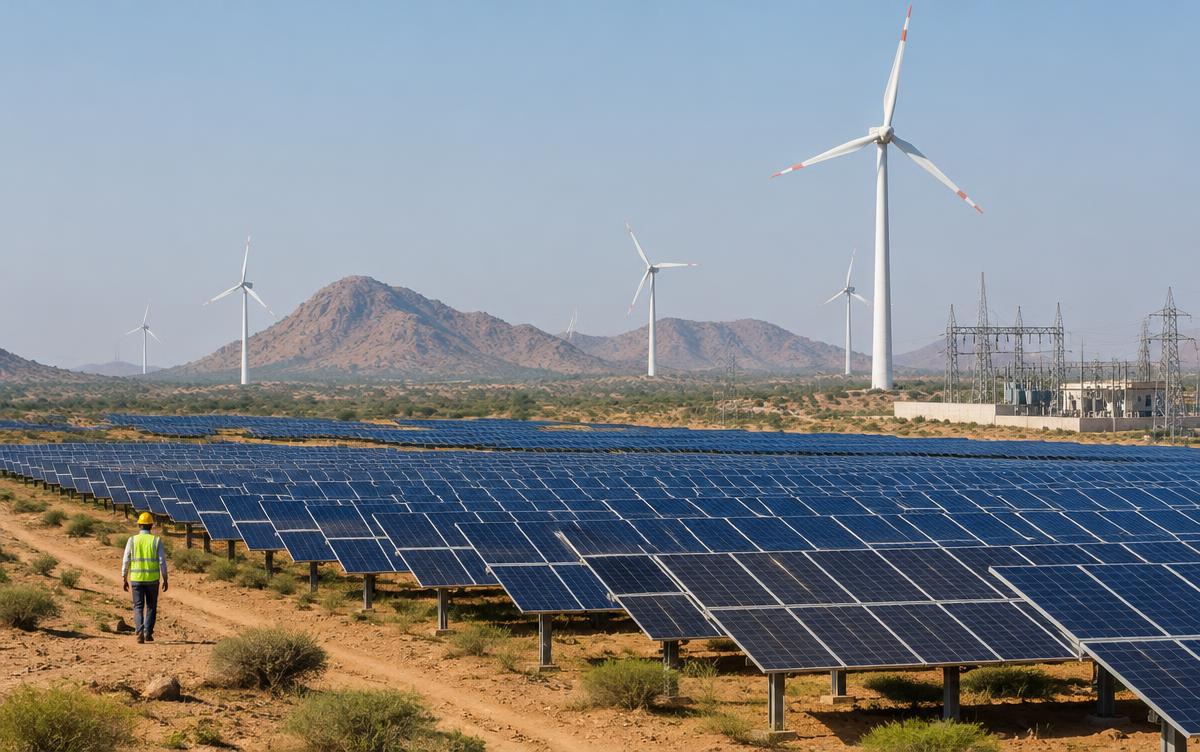
Industry expertise
Energy & Renewables market research in India
Research for solar, power, oil and gas and green-energy businesses.
Quick answer
Market Research India is a specialist energy & renewables research consultancy in India. We interview households, industrial buyers, installers in Hindi, Marathi, Gujarati, Tamil, Telugu, Kannada, Malayalam, Bengali, Odia, Assamese and English, with field teams in 50 cities and 4 methods matched to how this sector actually buys.
Proposal in 24 hours
Scoped, itemised and fixed-fee.
50 cities, 14 languages
Our own supervised field teams.
Senior-led, NDA-first
A research director on every project.
2,400+
Projects delivered
50
Cities with field teams
30
Industries covered
14
Indian languages
01
The decisions we help you make
Rooftop solar is sold to a household on payback and to a factory on tariff arbitrage, but both decisions stall in the same two places: the discom approval, and the question of who maintains the system in year four. Policy varies by state, so national averages are close to useless here.
How fast is rooftop solar being adopted?
What do industrial buyers need?
How do consumers view green energy?
At what payback period does a household stop deliberating and sign?
Which installer channel deserves investment, and which is damaging the brand after handover?
Tell us which of these you are actually facing and the design follows — sample, method and analysis plan are all downstream of the decision.
02
Who we talk to, and how we reach them
A sample is only as good as the definition behind it. Here is how each of these groups is found, screened and verified before anyone asks them a question.
Households
Screened on roof ownership and access, monthly electricity bill band and whether solar has already been quoted for, because stated intent without a usable roof is noise.
Industrial buyers
Recruited from industrial-estate and association frames, screened on connected load, tariff category and who signs off on capital expenditure or a power purchase agreement.
Installers
Sampled from empanelled vendor lists and local EPC networks, screened on installations actually completed in the last year, which filters out the registered-but-dormant.
Interviews run in Hindi, Marathi, Gujarati, Tamil, Telugu, Kannada, Malayalam, Bengali, Odia, Assamese and English, with every questionnaire translated and back-translated before fieldwork. Moderators and interviewers are briefed on the energy & renewables category itself, not handed a script — which is the difference between a respondent answering politely and a respondent explaining themselves.
03
Methods that fit this sector
These four come up repeatedly in briefs from this sector. Each page explains the method in full and what it delivers.
Strategy
Market Feasibility Studies
Where demand, tariff and state policy genuinely support a project, assessed site by site.
ViewStrategy
B2B Market Research
Industrial energy buying is a procurement process with a long approval chain and several veto points.
ViewStrategy
Market Sizing & Forecasting
Bottom-up demand built from connected load, tariff and roof data rather than from national capacity targets.
ViewQuantitative
Quantitative Surveys
Household samples large enough to read state by state, since tariffs and subsidies are set there.
View
04
What a typical study looks like
This is what a mid-sized study in this sector usually looks like. Smaller qualitative reads and larger tracking programmes scale from here.
Indicative scope — energy & renewables study
- Typical sample
- n=1,200 households across 6 states by tariff band, 120 industrial buyer interviews and 60 installer depths
- Who we interview
- Households, Industrial buyers, Installers — each recruited against a separate screener rather than drawn from one general sample.
- Core methods
- Market Feasibility Studies, B2B Market Research, Market Sizing & Forecasting, Quantitative Surveys
- Fieldwork window
- 5–6 weeks
- Standard deliverables
- Feasibility report, Entry strategy, Risk matrix, Account landscape
- Signature output
- A state-by-state payback and demand model with channel priorities attached
- Lead time
- 8–10 weeks from sign-off to debrief
05
Compliance, ethics and data quality
Research in this sector carries obligations that a generic fieldwork house will not have thought about. These are the ones we build into the protocol before the first interview is scheduled.
Policy stated, not promised
Subsidy, net-metering and tariff assumptions are shown as of a stated date, and respondents are told explicitly that these differ by state.
Industrial site safety
Plant visits follow the site's own PPE and permit rules, and interviews happen in offices rather than beside operating equipment.
Independent installer feedback
Installer opinions about brands are collected by an interviewer who does not disclose the sponsor until the debrief, so the feedback is about the product, not the audience.
Verification you can audit
Every household and installer we count is screened against a written definition, de-duplicated, GPS- and timestamp-logged in the field, and re-contacted on a 10% back-check with 10% of audio audited by a supervisor who did not run the interview.
What we will not do on a energy & renewables study
How we work
Our research process
- 01
Discovery
We turn your business question into clear research objectives.
- 02
Design
Sampling, method, questionnaire and discussion guides, translated into local languages.
- 03
Fieldwork
Supervised field teams with GPS, audio and back-check quality control.
- 04
Analysis
Statistical and thematic analysis by senior researchers.
- 05
Insight
Board-ready reports, dashboards and workshops with clear recommendations.
Where the sector concentrates
The Indian cities that matter most for energy & renewables
These are the markets whose own economy is built on this sector, which is where fieldwork costs least per useful interview and where the trade will actually talk to you. Each page covers energy & renewables research in that city specifically.
Tier 2 · Maharashtra
Nagpur
India's geographic centre and an emerging logistics and warehousing hub.
ViewTier 2 · Gujarat
Vadodara
An industrial city with petrochemical, engineering and education strengths.
ViewTier 2 · Andhra Pradesh
Visakhapatnam
A major port and industrial city on the Bay of Bengal.
ViewTier 2 · Jharkhand
Ranchi
Jharkhand's capital in a mineral-rich region.
ViewTier 2 · Odisha
Bhubaneswar
The Temple City and a fast-growing IT and education centre.
ViewTier 2 · Chhattisgarh
Raipur
A steel, power and rice-trading hub of central India.
ViewTier 2 · Assam
Guwahati
The gateway to Northeast India and a key distribution hub.
View
Before you brief us
Frequently asked questions
What does a energy & renewables research project cost in India?
Cost follows the sample, the seniority of the audience and the number of cities. Reaching households costs a fraction of what it costs to reach installers, so the audience mix moves the number far more than the headline interview count. Send a brief and you get a fixed-fee proposal within 24 hours.
Which cities should a energy & renewables study cover?
Start where the sector concentrates — Nagpur, Vadodara, Visakhapatnam, Ranchi, Bhubaneswar — then add markets that match your distribution rather than the national map. Most clients run four to eight cities so results can be compared side by side.
How do you make sure respondents are genuinely industrial buyers?
Each audience has its own written screener and its own frame. Respondents are de-duplicated against past projects, fieldwork is GPS- and timestamp-logged, 10% are re-contacted on a back-check and 10% of audio is audited by a supervisor who did not conduct the interview.
How long does a energy & renewables study take?
Fieldwork of the scope described above runs 5–6 weeks, and the whole project is typically 8–10 weeks from sign-off to debrief. Fieldwork usually begins five to seven working days after sign-off, once screeners and translations are approved.
Which methods suit energy & renewables research best?
For this sector we most often use market feasibility studies, b2b market research, market sizing & forecasting, quantitative surveys. The right combination depends on whether you need to size something, explain it or test it — a brief that names the decision gets a sharper design than one that names a method.
What safeguards apply to energy & renewables fieldwork?
Subsidy, net-metering and tariff assumptions are shown as of a stated date, and respondents are told explicitly that these differ by state. Alongside that, all personal data is collected on informed consent, held in India, pseudonymised before analysis and deleted on an agreed schedule, in line with the DPDP Act, 2023 and the ESOMAR code.
Sector at a glance
- Hub cities
- 7
- Audiences covered
- 3
- Fieldwork window
- 5–6 weeks
- Lead time
- 8–10 weeks
- Proposal
- Within 24 hours
Keep exploring
Energy & Renewables research, city by city and method by method
Fifty cities, twenty methods and the sectors that sit closest to energy & renewables. Each page is written for that specific combination of market and approach.
Tier 1 metros
8Full-scale quantitative fieldwork, viewing-facility groups and senior energy & renewables interviews in the eight largest markets.
Tier 2 growth markets
42Forty-two cities where energy & renewables demand is forming fastest, each covered by a supervised local field team.
Show 34 more
- Rajkot
- Nashik
- Aurangabad
- Coimbatore
- Madurai
- Kochi
- Thiruvananthapuram
- Visakhapatnamsector hub
- Vijayawada
- Mysore
- Mangalore
- Hubli-Dharwad
- Chandigarh
- Ludhiana
- Amritsar
- Jalandhar
- Dehradun
- Agra
- Varanasi
- Prayagraj
- Meerut
- Noida
- Gurugram
- Faridabad
- Ghaziabad
- Patna
- Ranchisector hub
- Bhubaneswarsector hub
- Raipursector hub
- Guwahatisector hub
- Jammu
- Goa
- Jodhpur
- Udaipur
By research method
20Every one of our twenty methods, written for the energy & renewables audience rather than in general.
- Consumer Researchquantitative
- B2B Market Researchstrategy
- Focus Group Discussionsqualitative
- In-Depth Interviewsqualitative
- Quantitative Surveysquantitative
- CATI Telephone Surveysquantitative
- Online Surveysquantitative
- Mystery Shoppingspecialist
Show 12 more
- Market Feasibility Studiesstrategy
- Competitor Analysisstrategy
- Brand Health Trackingquantitative
- Customer Satisfaction & NPSquantitative
- Product & Concept Testingquantitative
- Pricing Researchstrategy
- Market Sizing & Forecastingstrategy
- Ethnographic Researchqualitative
- Healthcare Market Researchspecialist
- Retail Audit & Distributionspecialist
- Usage & Attitude Studiesquantitative
- Advertising & Media Researchquantitative
Sectors that sit next to this one
4These most often appear in the same programme as a energy & renewables study, either as an adjacent market or a shared audience.
All other industries
25The rest of the thirty sectors we hold dedicated field and analysis experience in.
- FMCG
- Healthcare
- Pharmaceuticals
- Banking & Financial Services
- Insurance
- Automotive
- Real Estate
- Education & EdTech
Show 17 more
- Retail
- E-commerce & Quick Commerce
- Telecom
- Information Technology & SaaS
- Agriculture & Agritech
- Hospitality & Tourism
- Food & Beverage
- Consumer Durables & Electronics
- Fashion & Apparel
- Media & Entertainment
- Logistics & Supply Chain
- Chemicals & Specialty Materials
- Beauty & Personal Care
- Fintech
- Gaming & Esports
- Aviation & Airports
- Medical Devices
Next step
Make your next energy & renewables decision with evidence.