Use cases · 4 min read
Competitor Analysis by Industry: Use Cases from FMCG to Healthcare
How different Indian industries use competitor analysis: FMCG, healthcare, BFSI, automotive, real estate, edtech, retail and technology.
Quick answer
Competitor Analysis is used across Indian industries: FMCG for launches and packs, healthcare for prescriber and patient insight, BFSI for customer journeys, automotive for buyer needs, and technology for B2B demand.
At a glance
- Guide type
- Use cases · 4 minute read
- Method covered
- Competitor Analysis
- Research family
- Strategy research
- Typical timeline
- 4–6 weeks, including trade verification and win-loss interviews
- Typical sample
- six to twelve competitors profiled, backed by 15–25 channel or win-loss interviews
- Written for
- Category teams looking for precedent · Agencies pitching a sector · Anyone asking “does this work here?”
Key takeaways
- Every industry adapts the method to its buyers
- Specialist audiences need specialist recruitment
- Regulated sectors need compliance-aware research
- Cross-industry experience brings fresh perspective
Reader intent
Who this guide is for
Three readers arrive here with different problems. Each should be able to act on this page without reading all of it.
Category teams looking for precedent
Where competitor analysis has moved a decision in sectors adjacent to yours.
Agencies pitching a sector
Use-case patterns that travel across categories, and the ones that do not.
Anyone asking “does this work here?”
Sector-by-sector applications, with the typical question each one answers.
01
FMCG
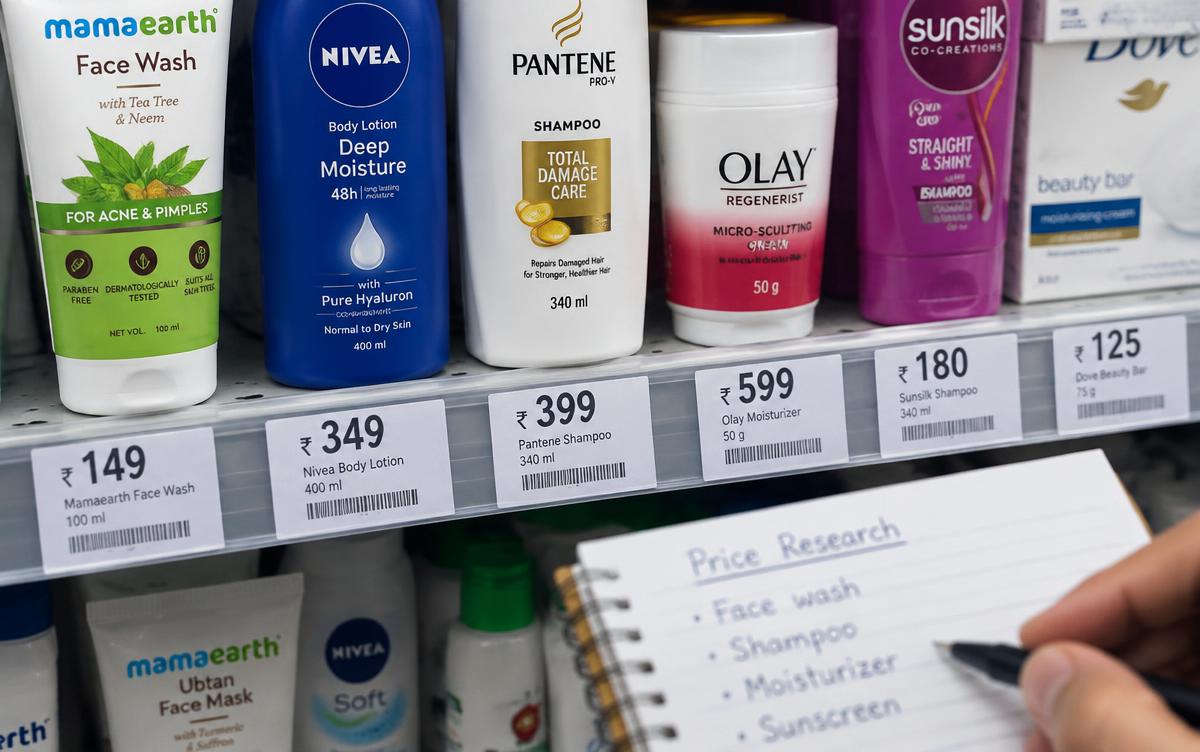
Research for packaged foods, home care and personal care brands across general and modern trade. Typical competitor analysis questions: Which pack sizes win in rural markets? How are D2C brands changing loyalty?
02
Healthcare
Insights for hospitals, diagnostics chains, clinics and health-tech platforms. Typical competitor analysis questions: How do patients choose a hospital? What drives diagnostics loyalty?
03
Pharmaceuticals
Prescriber, chemist and patient research for Indian and global pharma companies. Typical competitor analysis questions: How do doctors pick between brands? What is the trade margin structure?
04
Banking & Financial Services
Customer, channel and product research for banks, NBFCs and wealth managers. Typical competitor analysis questions: Why do customers switch banks? How is credit demand changing in Tier 2 cities?
05
Insurance
Research on purchase journeys, agent channels and claims experience for insurers. Typical competitor analysis questions: What stops people buying health cover? How do agents influence choice?
06
Automotive
Research for car, two-wheeler and component makers, from concept clinics to dealer studies. Typical competitor analysis questions: What features matter to first-time buyers? How are dealers performing?
07
Electric Vehicles
Adoption, charging and pricing research for India's fast-growing EV market. Typical competitor analysis questions: What stops people buying an EV? Where is charging infrastructure needed?
08
Real Estate
Demand, pricing and buyer research for developers, REITs and brokers. Typical competitor analysis questions: What price can this micro-market support? What amenities do buyers value?
09
How Market Research India can help
Market Research India designs and runs competitor analysis projects across 50 Indian cities and 30 industries. A senior research director leads every study, and our own supervised teams handle the fieldwork. You get clear recommendations, not just data tables.
Share your objective and we will send a scoped, fixed-fee proposal within 24 hours, with a recommended method, sample and timeline.
What goes wrong
Common mistakes in competitor analysis
Most disappointing competitor analysis studies fail for reasons that were visible in the design, not in the fieldwork. These are the ones we see most often, and what to do instead.
- 01
Stopping at desk research
A competitor's website describes its intention. The shelf, the dealer and the lost deal describe its execution, and only one of the three is published.
- 02
Profiling the competitors you name
Buyers shortlist a different set from the one your team argues about internally. Let the consideration set come from buyers, substitutes and the do-nothing option included.
- 03
Quoting list prices
In Indian trade the transacted price, scheme and credit terms differ from the list price. Verify in the channel before building any argument on price.
- 04
A SWOT with no consequence
Four boxes of adjectives change nothing. Every competitor finding should end in a move you would make, or it does not belong in the report.
- 05
Findings that arrive after the decision
Research timed to land after the investment committee has met is an audit, not an input. Work back from the decision date and cut scope rather than slip.
- 06
Assumptions buried in the model
A number nobody can trace is challenged once and ignored thereafter. Every assumption on its own labelled line, with its source.
Run through this before sign-off
Your checklist before you brief anyone
A working sequence for a competitor analysis project. Most of it costs nothing, and it saves the two weeks a re-field would take.
- 1
Build the competitor set from buyers' stated consideration list, including substitutes.
- 2
Verify pricing, schemes and credit terms in the trade rather than from published lists.
- 3
Interview the deals you lost; they explain more than the deals you won.
- 4
Map distribution reach and channel economics, not just product and positioning.
- 5
Plot the positioning map on the two axes buyers actually use to choose.
- 6
Hand over a working model rather than a PDF, so the team can update it next quarter.
- 7
Agree in writing who acts on each finding, and by when, before the debrief ends.
Need competitor analysis?
Get a scoped proposal within 24 hours.
Answers
Frequently asked questions
The questions buyers ask us most often before they commission competitor analysis.
Do you have industry specialists?
Yes. We have dedicated teams covering 30 industries.
From guide to project
Where competitor analysis actually gets commissioned
If this guide has settled the method, these are the pages worth opening next: the service itself, and the markets where competitor analysis is most often run for our clients.
The service
Competitor Analysis in India
The commissioned version of this guide: competitive benchmarking, price tracking, channel mapping, delivered as competitor profiles, swot, positioning map.
ViewMaharashtra
Competitor Analysis in Mumbai
Metro-scale competitor analysis with supervised field teams, working in Marathi, Gujarati, Hindi and English. Most often commissioned here by Banking & Financial Services and Media & Entertainment teams.
ViewDelhi
Competitor Analysis in Delhi NCR
Metro-scale competitor analysis with supervised field teams, working in Hindi, Punjabi and English. Most often commissioned here by Government & Social Sector and Retail teams.
ViewKarnataka
Competitor Analysis in Bangalore
Metro-scale competitor analysis with supervised field teams, working in Tamil, Telugu, Kannada, Malayalam and English. Most often commissioned here by Information Technology & SaaS and E-commerce & Quick Commerce teams.
ViewTamil Nadu
Competitor Analysis in Chennai
Metro-scale competitor analysis with supervised field teams, working in Tamil, Telugu, Kannada, Malayalam and English. Most often commissioned here by Automotive and Manufacturing & Industrial teams.
ViewChhattisgarh
Competitor Analysis in Raipur
Tier 2 competitor analysis covering the city and its surrounding districts, working in Hindi and English. Most often commissioned here by Energy & Renewables and Manufacturing & Industrial teams.
View
Keep exploring
More reading on competitor analysis
Grouped rather than listed, so you can find the one page you need instead of scanning a wall of links.
More on competitor analysis
14Every angle we have published on this method: what it costs, how long it takes, how large the sample should be and how to choose a partner.
- How Much Does Competitor Analysis Cost in India? A Pricing Guide
- Competitor Analysis in India: The Complete Guide
- How to Choose a Competitor Analysis Agency in India
- Competitor Analysis Checklist: 12 Steps Before You Commission a Study
- 7 Costly Competitor Analysis Mistakes Brands Make in India
- Competitor Analysis Sample Size and Sampling Guide for India
- How Long Does Competitor Analysis Take? Project Timelines Explained
- Competitor Analysis for Foreign Companies Entering India
Show 6 more
- Competitor Analysis in Tier 2 and Tier 3 India: How to Get It Right
- Competitor Analysis for Startups: Getting Evidence on a Budget
- How to Write a Competitor Analysis Brief (Free Template)
- In-House vs Agency Competitor Analysis: Which Is Right for You?
- Measuring the ROI of Competitor Analysis
- Competitor Analysis: 10 Questions to Ask Before You Hire a Research Firm
Other use cases articles
19The same use cases written for each of our other research methods, so you can compare like with like.
- Consumer Research by Industry: Use Cases from FMCG to Healthcare
- B2B Market Research by Industry: Use Cases from FMCG to Healthcare
- Focus Group Discussions by Industry: Use Cases from FMCG to Healthcare
- In-Depth Interviews by Industry: Use Cases from FMCG to Healthcare
- Quantitative Surveys by Industry: Use Cases from FMCG to Healthcare
- CATI Telephone Surveys by Industry: Use Cases from FMCG to Healthcare
- Online Surveys by Industry: Use Cases from FMCG to Healthcare
- Mystery Shopping by Industry: Use Cases from FMCG to Healthcare
Show 11 more
- Market Feasibility Studies by Industry: Use Cases from FMCG to Healthcare
- Brand Health Tracking by Industry: Use Cases from FMCG to Healthcare
- Customer Satisfaction & NPS by Industry: Use Cases from FMCG to Healthcare
- Product & Concept Testing by Industry: Use Cases from FMCG to Healthcare
- Pricing Research by Industry: Use Cases from FMCG to Healthcare
- Market Sizing & Forecasting by Industry: Use Cases from FMCG to Healthcare
- Ethnographic Research by Industry: Use Cases from FMCG to Healthcare
- Healthcare Market Research by Industry: Use Cases from FMCG to Healthcare
- Retail Audit & Distribution by Industry: Use Cases from FMCG to Healthcare
- Usage & Attitude Studies by Industry: Use Cases from FMCG to Healthcare
- Advertising & Media Research by Industry: Use Cases from FMCG to Healthcare
Competitor Analysis city by city
50Local field teams, local languages and the sector mix each market is strongest in.
- Competitor Analysis in MumbaiTier 1
- Competitor Analysis in Delhi NCRTier 1
- Competitor Analysis in BangaloreTier 1
- Competitor Analysis in ChennaiTier 1
- Competitor Analysis in HyderabadTier 1
- Competitor Analysis in KolkataTier 1
- Competitor Analysis in PuneTier 1
- Competitor Analysis in AhmedabadTier 1
Show 42 more
- Competitor Analysis in JaipurTier 2
- Competitor Analysis in LucknowTier 2
- Competitor Analysis in KanpurTier 2
- Competitor Analysis in NagpurTier 2
- Competitor Analysis in IndoreTier 2
- Competitor Analysis in BhopalTier 2
- Competitor Analysis in SuratTier 2
- Competitor Analysis in VadodaraTier 2
- Competitor Analysis in RajkotTier 2
- Competitor Analysis in NashikTier 2
- Competitor Analysis in AurangabadTier 2
- Competitor Analysis in CoimbatoreTier 2
- Competitor Analysis in MaduraiTier 2
- Competitor Analysis in KochiTier 2
- Competitor Analysis in ThiruvananthapuramTier 2
- Competitor Analysis in VisakhapatnamTier 2
- Competitor Analysis in VijayawadaTier 2
- Competitor Analysis in MysoreTier 2
- Competitor Analysis in MangaloreTier 2
- Competitor Analysis in Hubli-DharwadTier 2
- Competitor Analysis in ChandigarhTier 2
- Competitor Analysis in LudhianaTier 2
- Competitor Analysis in AmritsarTier 2
- Competitor Analysis in JalandharTier 2
- Competitor Analysis in DehradunTier 2
- Competitor Analysis in AgraTier 2
- Competitor Analysis in VaranasiTier 2
- Competitor Analysis in PrayagrajTier 2
- Competitor Analysis in MeerutTier 2
- Competitor Analysis in NoidaTier 2
- Competitor Analysis in GurugramTier 2
- Competitor Analysis in FaridabadTier 2
- Competitor Analysis in GhaziabadTier 2
- Competitor Analysis in PatnaTier 2
- Competitor Analysis in RanchiTier 2
- Competitor Analysis in BhubaneswarTier 2
- Competitor Analysis in RaipurTier 2
- Competitor Analysis in GuwahatiTier 2
- Competitor Analysis in JammuTier 2
- Competitor Analysis in GoaTier 2
- Competitor Analysis in JodhpurTier 2
- Competitor Analysis in UdaipurTier 2
Related research services
19Strategy methods first — these are the ones most often combined with competitor analysis in a single study.
- B2B Market ResearchStrategy
- Market Feasibility StudiesStrategy
- Pricing ResearchStrategy
- Market Sizing & ForecastingStrategy
- Consumer ResearchQuantitative
- Focus Group DiscussionsQualitative
- In-Depth InterviewsQualitative
- Quantitative SurveysQuantitative
Show 11 more
- CATI Telephone SurveysQuantitative
- Online SurveysQuantitative
- Mystery ShoppingSpecialist
- Brand Health TrackingQuantitative
- Customer Satisfaction & NPSQuantitative
- Product & Concept TestingQuantitative
- Ethnographic ResearchQualitative
- Healthcare Market ResearchSpecialist
- Retail Audit & DistributionSpecialist
- Usage & Attitude StudiesQuantitative
- Advertising & Media ResearchQuantitative