Industry expertise
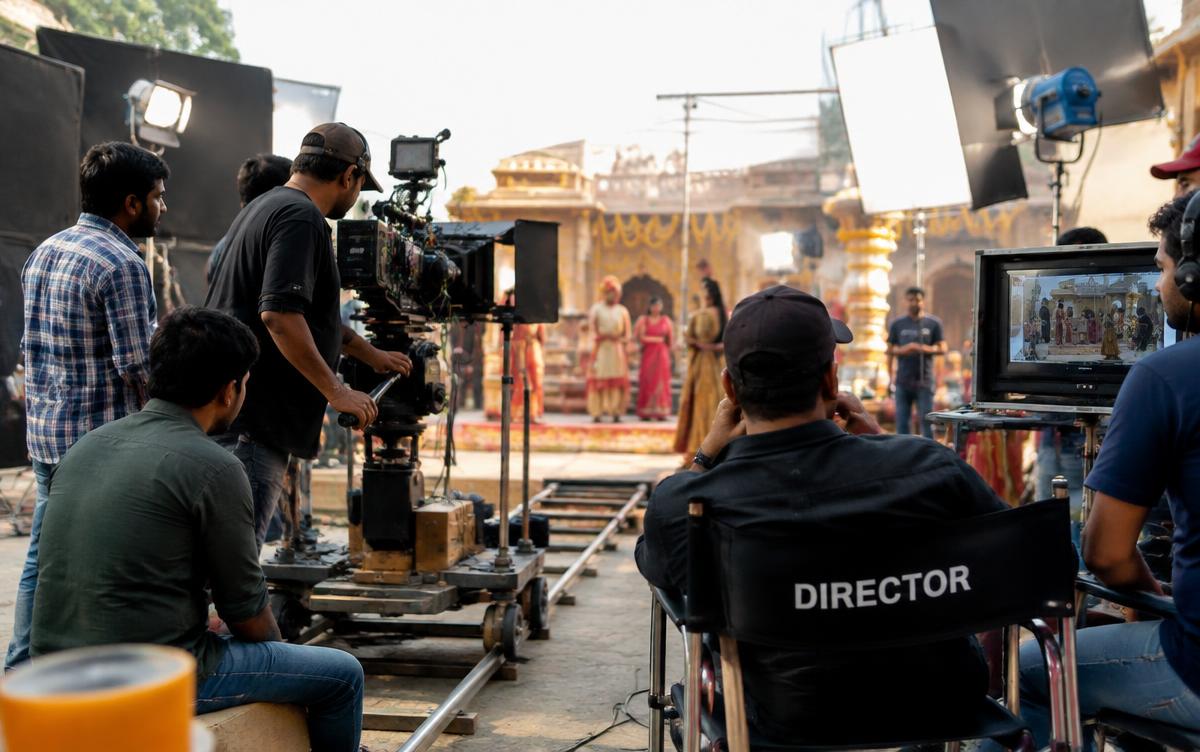
Media & Entertainment market research in India
Audience, content and platform research for OTT, TV, radio and publishers.
Quick answer
Market Research India is a specialist media & entertainment research consultancy in India. We interview viewers, advertisers, creators in Marathi, Gujarati, Hindi, Punjabi, Tamil, Telugu, Kannada, Malayalam, Bengali, Odia and English, with field teams in 50 cities and 4 methods matched to how this sector actually buys.
Proposal in 24 hours
Scoped, itemised and fixed-fee.
50 cities, 14 languages
Our own supervised field teams.
Senior-led, NDA-first
A research director on every project.
2,400+
Projects delivered
50
Cities with field teams
30
Industries covered
14
Indian languages
01
The decisions we help you make
Indian audiences are regional-first and mobile-first, and the subscription decision is made in a household where four people want four different things. Churn follows the end of a show far more reliably than it follows the end of a billing month.
What makes viewers subscribe to OTT?
How are regional languages growing?
What content do audiences want?
Which titles justify the subscription price, and which merely retain subscribers you already had?
Where should the next regional-language investment go?
Each of these is a decision with a cost attached, which is why we design backwards from them rather than forwards from a questionnaire.
02
Who we talk to, and how we reach them
Who you talk to decides what the study can conclude. We treat each audience as a separate recruitment problem rather than as quotas in one sample.
Viewers
Recruited from verified panels with quotas on language, platform repertoire and co-viewing, screened on actual viewing in the last seven days rather than on a claimed subscription.
Advertisers
Approached by name at brands and media agencies, screened on annual media spend, category and whether the respondent sets the plan or signs it off.
Creators
Sampled across follower bands and languages through creator networks and MCNs, screened on posting frequency and the share of income earned from content.
Interviews run in Marathi, Gujarati, Hindi, Punjabi, Tamil, Telugu, Kannada, Malayalam, Bengali, Odia and English, with every questionnaire translated and back-translated before fieldwork. Moderators and interviewers are briefed on the media & entertainment category itself, not handed a script — which is the difference between a respondent answering politely and a respondent explaining themselves.
03
Methods that fit this sector
These four come up repeatedly in briefs from this sector. Each page explains the method in full and what it delivers.
Quantitative
Advertising & Media Research
Pre-testing and campaign tracking across television, digital and outdoor with creative diagnostics attached.
ViewQuantitative
Online Surveys
Fast, large reads on a connected audience, fielded in the languages they actually watch in.
ViewQualitative
Focus Group Discussions
Content and format reaction, where the co-viewing argument reveals the real household decision.
ViewQuantitative
Brand Health Tracking
Platform consideration and content perception tracked wave on wave, against a shifting slate.
View
04
What a typical study looks like
Indicative, not fixed — but close enough to budget against before you have written a brief.
Indicative scope — media & entertainment study
- Typical sample
- n=2,000 viewers across 6 languages, 8 focus groups and 40 advertiser and creator interviews
- Who we interview
- Viewers, Advertisers, Creators — each recruited against a separate screener rather than drawn from one general sample.
- Core methods
- Advertising & Media Research, Online Surveys, Focus Group Discussions, Brand Health Tracking
- Fieldwork window
- 3–5 weeks
- Standard deliverables
- Ad effectiveness scores, Creative guidance, Media mix insights, Real-time dashboards
- Signature output
- A content-to-retention map separating titles that acquire from titles that merely retain
- Lead time
- 6–8 weeks from sign-off to debrief
05
Compliance, ethics and data quality
Research in this sector carries obligations that a generic fieldwork house will not have thought about. These are the ones we build into the protocol before the first interview is scheduled.
Age-appropriate exposure
Stimulus is matched to certification. No participant sees material above their age rating, and anyone under 18 needs parental consent.
Pre-release confidentiality
Unreleased content is screened under NDA on controlled devices, with watermarking where the title requires it.
Creator earnings kept private
Income and brand-deal figures are reported as banded aggregates and never attributed to a named creator.
Verification you can audit
Every viewer and creator we count is screened against a written definition, de-duplicated, GPS- and timestamp-logged in the field, and re-contacted on a 10% back-check with 10% of audio audited by a supervisor who did not run the interview.
What we will not do on a media & entertainment study
How we work
Our research process
- 01
Discovery
We turn your business question into clear research objectives.
- 02
Design
Sampling, method, questionnaire and discussion guides, translated into local languages.
- 03
Fieldwork
Supervised field teams with GPS, audio and back-check quality control.
- 04
Analysis
Statistical and thematic analysis by senior researchers.
- 05
Insight
Board-ready reports, dashboards and workshops with clear recommendations.
Where the sector concentrates
The Indian cities that matter most for media & entertainment
Media & entertainment is concentrated rather than spread: 2 cities carry most of the sector's weight, so we start there and add the metros that supply the rest of the demand. Each page covers media & entertainment research in that city specifically.
Tier 1 · Maharashtra
Mumbai
India's financial capital and headquarters city for most FMCG, BFSI and media companies.
ViewTier 2 · Uttar Pradesh
Noida
A planned NCR city with IT parks, media houses and electronics manufacturing.
ViewTier 1 · Delhi
Delhi NCR
The national capital region, a vast and diverse consumer market and India's policy hub.
ViewTier 1 · Karnataka
Bangalore
India's startup and technology capital, home to global capability centres and digital-first consumers.
ViewTier 1 · Tamil Nadu
Chennai
The 'Detroit of India', a manufacturing and healthcare powerhouse on the east coast.
ViewTier 1 · Telangana
Hyderabad
A life-sciences and technology hub, often called the pharma capital of India.
ViewTier 1 · West Bengal
Kolkata
The commercial gateway to East and Northeast India with a strong trading heritage.
ViewTier 1 · Maharashtra
Pune
An automotive and IT cluster with one of India's largest student populations.
View
Before you brief us
Frequently asked questions
What does a media & entertainment research project cost in India?
Cost follows the sample, the seniority of the audience and the number of cities. Reaching viewers costs a fraction of what it costs to reach creators, so the audience mix moves the number far more than the headline interview count. Send a brief and you get a fixed-fee proposal within 24 hours.
Which cities should a media & entertainment study cover?
Start where the sector concentrates — Mumbai, Noida, Delhi NCR, Bangalore, Chennai — then add markets that match your distribution rather than the national map. Most clients run four to eight cities so results can be compared side by side.
How do you make sure respondents are genuinely advertisers?
Each audience has its own written screener and its own frame. Respondents are de-duplicated against past projects, fieldwork is GPS- and timestamp-logged, 10% are re-contacted on a back-check and 10% of audio is audited by a supervisor who did not conduct the interview.
How long does a media & entertainment study take?
Fieldwork of the scope described above runs 3–5 weeks, and the whole project is typically 6–8 weeks from sign-off to debrief. Fieldwork usually begins five to seven working days after sign-off, once screeners and translations are approved.
Which methods suit media & entertainment research best?
For this sector we most often use advertising & media research, online surveys, focus group discussions, brand health tracking. The right combination depends on whether you need to size something, explain it or test it — a brief that names the decision gets a sharper design than one that names a method.
What safeguards apply to media & entertainment fieldwork?
Stimulus is matched to certification. No participant sees material above their age rating, and anyone under 18 needs parental consent. Alongside that, all personal data is collected on informed consent, held in India, pseudonymised before analysis and deleted on an agreed schedule, in line with the DPDP Act, 2023 and the ESOMAR code.
Sector at a glance
- Hub cities
- 2
- Audiences covered
- 3
- Fieldwork window
- 3–5 weeks
- Lead time
- 6–8 weeks
- Proposal
- Within 24 hours
Keep exploring
Media & Entertainment research, city by city and method by method
Fifty cities, twenty methods and the sectors that sit closest to media & entertainment. Each page is written for that specific combination of market and approach.
Tier 1 metros
8Full-scale quantitative fieldwork, viewing-facility groups and senior media & entertainment interviews in the eight largest markets.
Tier 2 growth markets
42Forty-two cities where media & entertainment demand is forming fastest, each covered by a supervised local field team.
By research method
20Every one of our twenty methods, written for the media & entertainment audience rather than in general.
- Consumer Researchquantitative
- B2B Market Researchstrategy
- Focus Group Discussionsqualitative
- In-Depth Interviewsqualitative
- Quantitative Surveysquantitative
- CATI Telephone Surveysquantitative
- Online Surveysquantitative
- Mystery Shoppingspecialist
Show 12 more
- Market Feasibility Studiesstrategy
- Competitor Analysisstrategy
- Brand Health Trackingquantitative
- Customer Satisfaction & NPSquantitative
- Product & Concept Testingquantitative
- Pricing Researchstrategy
- Market Sizing & Forecastingstrategy
- Ethnographic Researchqualitative
- Healthcare Market Researchspecialist
- Retail Audit & Distributionspecialist
- Usage & Attitude Studiesquantitative
- Advertising & Media Researchquantitative
Sectors that sit next to this one
4These most often appear in the same programme as a media & entertainment study, either as an adjacent market or a shared audience.
All other industries
25The rest of the thirty sectors we hold dedicated field and analysis experience in.
- FMCG
- Healthcare
- Pharmaceuticals
- Banking & Financial Services
- Insurance
- Automotive
- Electric Vehicles
- Real Estate
Show 17 more
- Education & EdTech
- Retail
- Information Technology & SaaS
- Energy & Renewables
- Agriculture & Agritech
- Manufacturing & Industrial
- Hospitality & Tourism
- Food & Beverage
- Consumer Durables & Electronics
- Logistics & Supply Chain
- Chemicals & Specialty Materials
- Construction & Infrastructure
- Beauty & Personal Care
- Fintech
- Aviation & Airports
- Medical Devices
- Government & Social Sector
Next step
Make your next media & entertainment decision with evidence.